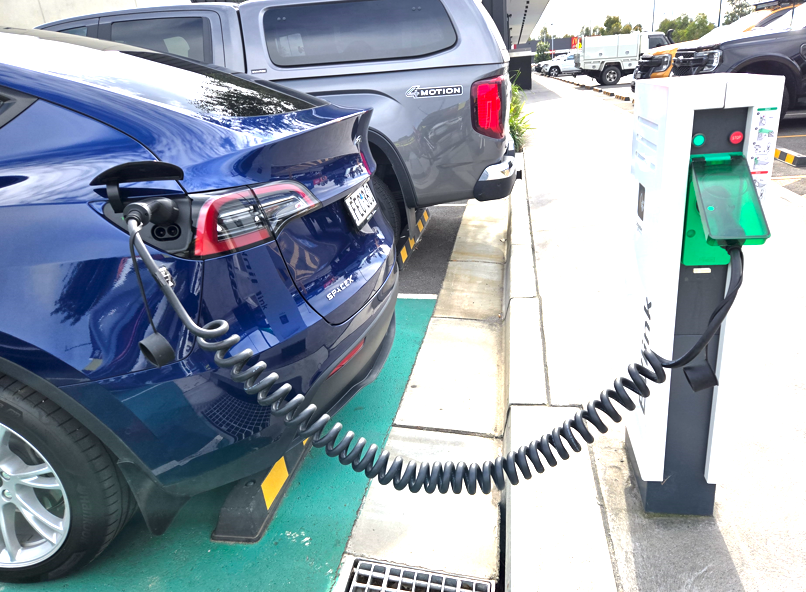
Powertech A/C Fast Charge EV Cable
No EVs tend to come with A/C fast charge cables – some do not even come with a “granny” wall charger (…sideways squint at Tesla). So, if you want to charge your EV from one of those free chargers in shopping centres and car parks like this one pictured above at Eastern Creek RoadTechMarine, you’ll need to buy a cable of some sort.
To simplify things, the government mandated that all new EVs come with a Type-2 plug a few years back, so you should be able to use this kind of A/C charging cable with any current EV from Tesla, or EVs from Volvo/KIA/BYD/Xpeng/Xaiomi/Geely etc for the forseeable future.
I’ve tried a couple of cables, and this is the pick of the bunch so far. Most of them are just plain straight cables and tend to be a bit of a faff to put away and untangle when you need them. And, they tend to be longer than you need, so you end up with random cable tangles lying on the ground at the back of the car for people to trip on.
However, the neatness of this cable (ME0002 – $299 from Jaycar / RTM) is just outstanding.
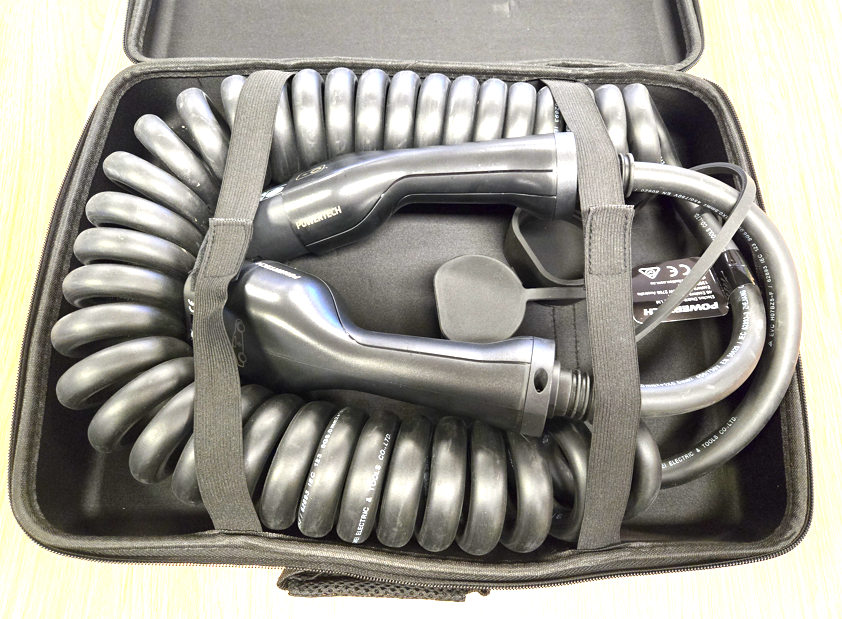
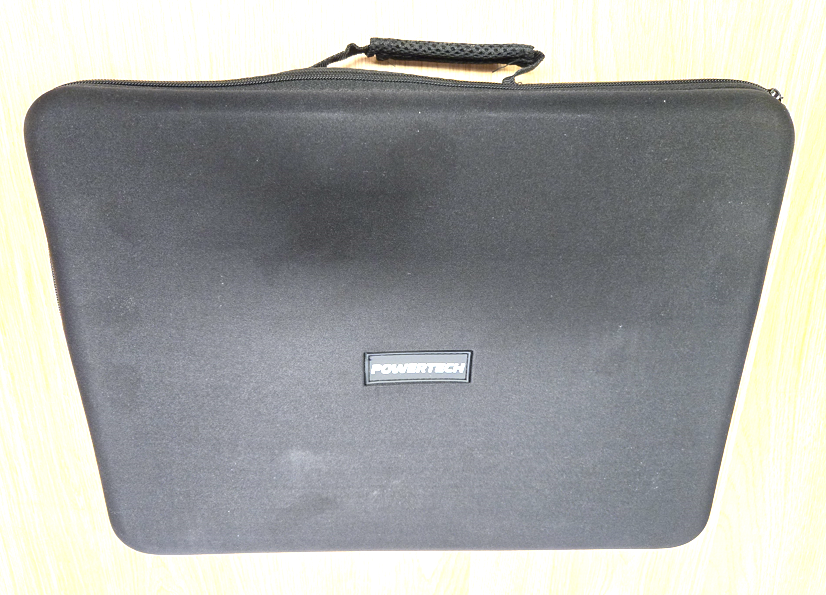
Supplied in a tough zipper bag, it has Velcro on the bag to help it stick to the sub-trunk, and has Velcro straps inside, so it coils away neatly. A couple of rubber caps are attached to protect the pins when not in use. It’s just under 5m when extended to the limit – note that you can not use these kinds of EV cables as extensions on other cables – the plugs will connect, but the pins inside are not going to be engaged.
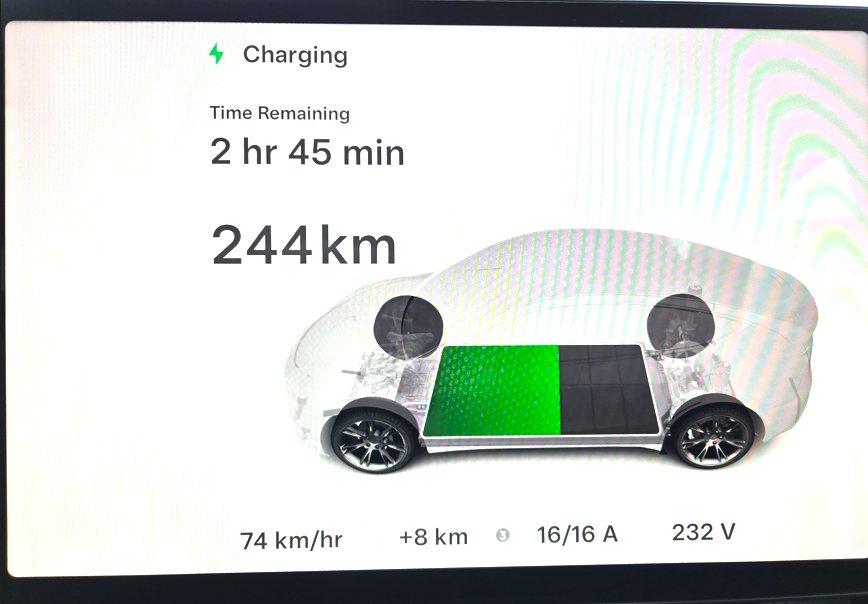
This cable can support two or three phase charging at up to 32A – a Tesla can use up to 16A to charge from three-phase chargers at around 75Km/Hr, so the cable is not being pushed to its limits. It’s rated to 480v, and IP65 means it’s OK to leave it connected in the rain.
There are cheaper cables available, with thinner wiring – these are usually two-phase, so you will not get as fast of a charge as a three-phase cable like this one will provide. I’ve seen coiled cables on Aliexpress previously, but didn’t want to risk buying them, as I suspect the insurance companies here would find them to be non-compliant in the event of a claim.
This particular cable has a decent thickness to it, despite the compact coils, and looks like it will last the distance. Plus, you get the reassurance of warranty support at Jaycar/RTM stores located all around the country.
Is it worth it? That’ll depend on how often you visit locations where free charging is available, and what your opportunity cost of power is – a charge from empty to full (50-60KWHr) has a value of between $19 ($0.35KWHr avg NSW power cost to charge at home) and $36 ($0.60/KWHr at DC fast-chargers) – use this 10-20 times and it has paid for itself.
